For over two centuries, scholars in Türkiye have produced a rich and sophisticated body of work across Islamic sciences and intellectual history. Yet this scholarship has remained insufficiently visible in global academic discourse, while Western and Orientalist studies have long circulated widely in Turkish translation.The Turkish Islamic Studies series (TISs) responds to this imbalance by introducing major works of Turkish Islamic scholarship to international readers through carefully supervised English translations. The series aims to foster a more reciprocal exchange of knowledge and to open Türkiye’s Islamic scholarly heritage to the world.
About this Volume
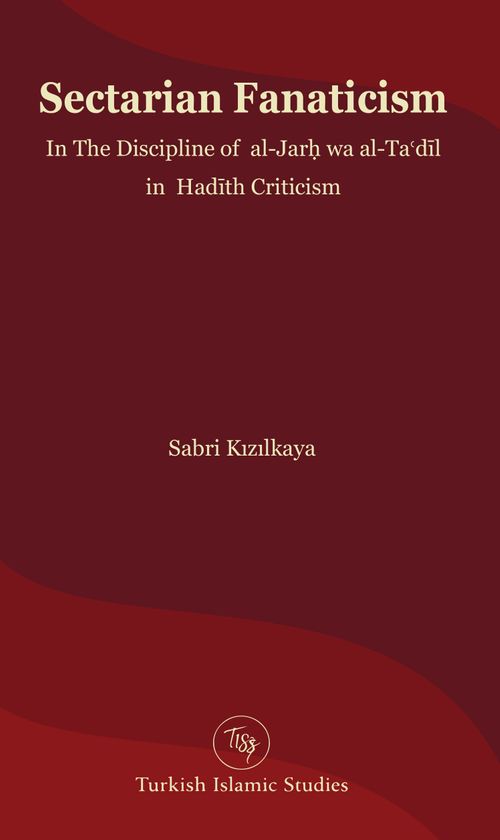
This volume offers a critical and methodologically rigorous examination of sectarian fanaticism within al-jarḥ wa-l-taʿdīl, the central discipline of ḥadīth narrator criticism. Challenging the assumption of complete objectivity, it situates the discipline within the historical realities of early Islamic intellectual and sectarian formations.Drawing on classical sources, the study analyzes how theological affiliations—such as those of the Khawārij, Shīʿa, Murjiʾa, Muʿtazila, and Qadariyya—intersected with the evaluation of transmitters. It traces the development of isnād criticism, technical evaluative terminology, and the principles that governed scholarly judgment across successive generations.Particular attention is given to the transmission of ahl al-bidʿa, the acceptance or rejection of their reports, and the tensions between doctrinal boundaries and scholarly rigor. Through case studies, including narrators found in al-Bukhārī and Muslim, the work reveals how authority, belief, and criticism became deeply intertwined.Reassessing the foundations of ḥadīth criticism, this volume contributes to contemporary debates on methodology, objectivity, and knowledge formation in the Islamic scholarly tradition.
Opening Türkiye’s Islamic scholarship to the world.